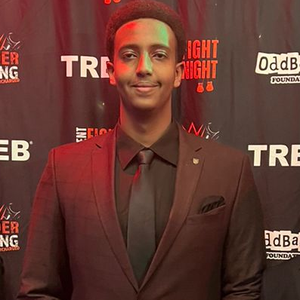
Aman M.
I am from Ethiopia
I study Medicine at University of Nicosia· Cyprus
Medicine in Cyprus
Surgeon
I grew up across different countries in East Africa before I started the Medical Foundation programme at IFG. I am currently enrolled as a medical student at the University of Nicosia in Cyprus, aiming for a career in orthopaedic surgery.
Ask me about
Aman is a former student and verified International Foundation Group ambassador
Why Aman chose this path
“I've always been fascinated by the precision and immediacy of surgery. Orthopaedics in particular - restoring mobility and transforming someone's quality of life is remarkable.”
What attracted me
Growing up in East Africa, I saw many people with musculoskeletal conditions who couldn't access surgical care. I want to be part of closing that gap.
My background before
I completed secondary school across East Africa and enrolled in IFG's Medical Foundation Programme - exactly the structured academic pathway I needed to qualify for a European medical school.
How I got in
I completed the IFG Medical Foundation Programme, which provided the scientific grounding required for University of Nicosia. The programme was intense but supportive - tutors understood students from diverse educational backgrounds.
Top tips for getting accepted
Research your target medical schools thoroughly before applying. University of Nicosia is internationally recognised and teaches in English - but understand exactly what each school requires from Foundation applicants.
Common mistakes to avoid
Underestimating the adjustment from your home educational system to a UK-style Foundation. The approach to independent study is quite different - start practising self-directed learning early.
My recommendation to you
I was accepted by the University of Nicosia after strong Foundation results. The transition to Cyprus was a big change - but embrace it. New environments make you adaptable.
What Aman wishes they knew
Things I wish I knew before starting
How different European medical school is from what I'd imagined. The problem-based learning approach requires real ownership of your education. It's empowering once you adjust.
What surprised me most
How international the University of Nicosia campus is. Students from over 80 countries - it feels like the world in miniature, excellent preparation for clinical work.
The hardest part
Being completely independent for the first time. Academically I was prepared, but the personal adjustment took time. IFG's pastoral support helped enormously.
The best decision I made
Choosing Cyprus over staying in Africa to study. The quality of training, clinical exposure, and international perspective have been transformative.
Biggest misconception people have
That studying medicine in Cyprus is second-tier. University of Nicosia is on the GMC's approved list and its graduates practise across Europe and internationally.
What helped me most
Finding my community early. Seeking out other international students - especially those from Africa - created a support network that made every challenge more manageable.
What it's actually like
A typical day
Up by 6:30 to review notes before 8am anatomy lectures. Afternoons for clinical skills labs and problem-based learning in small groups. Evenings I cook Ethiopian food, then study until around 11pm.
The reality vs. the expectation
More intensive than I expected in the early years. The volume of biochemistry, physiology, and anatomy all at once is demanding - but the faculty structure makes it manageable.
My favourite part
Clinical skills labs. Working in small groups on patient scenarios, even in simulation, is where theory becomes real. It keeps me motivated through the heavy study weeks.
Most challenging part
The first-year curriculum density. Every week brings a new wave of material. Building a disciplined revision routine early was the key to staying afloat.
Where it's taken me
Skills I've gained
Scientific rigour, clinical reasoning, cross-cultural communication, adaptability, and the ability to learn independently under pressure.
How it's helped my career
I am in my first year of the MD programme at University of Nicosia. The IFG pathway made this possible.
Opportunities it has opened
Access to European medical networks, research opportunities at University of Nicosia, and a growing international alumni community spanning medicine across multiple continents.
Topics Aman can help with
Questions students ask Aman
Is the University of Nicosia medical degree recognised in the UK?
What was the hardest part of the IFG Foundation Year?
Is it worth it?
Ready to ask Aman a question?
